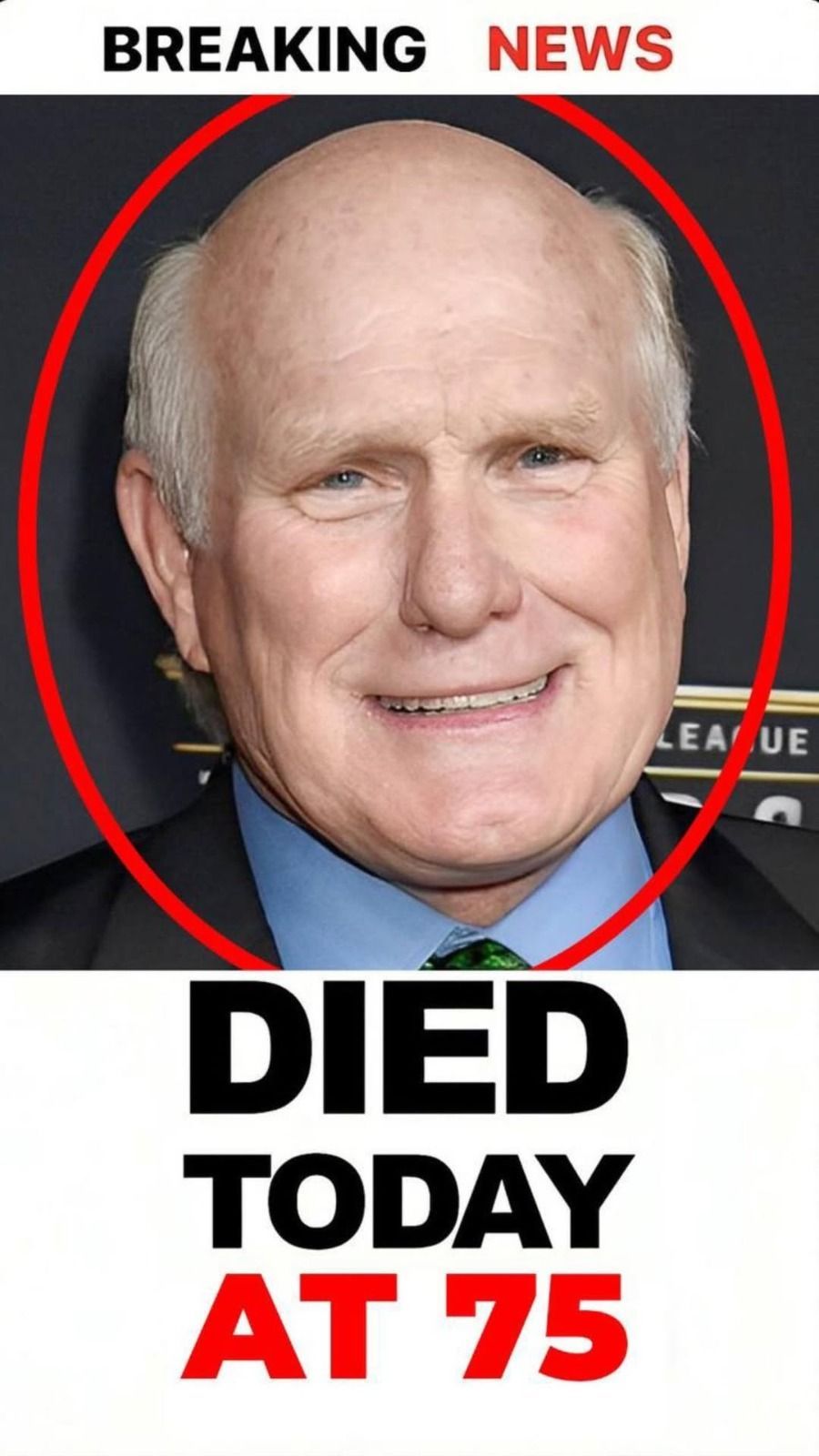
For more than half a century, Terry Bradshaw has occupied a rare and enduring place in American culture. He is not remembered merely as a legendary.
Quarterback or a charismatic television personality. He represents an entire generation defined by mental toughness, authentic humor, and perseverance.
From the cold, unforgiving football fields of the 1970s NFL to the brightly lit studios of Sunday morning sports broadcasts, Bradshaw’s presence has felt reassuringly constant.
His unmistakable voice, infectious laughter, and larger-than-life personality have accompanied millions of fans through decades of change in both sports and society.

Yet even figures who appear timeless are not immune to the realities of human vulnerability. In recent years, Bradshaw quietly faced one of the most serious challenges of his life—a private battle with two separate forms of cancer
. The public learned about this chapter only after he had already endured surgeries, radiation treatments, long periods of uncertainty, and recovery.
The revelation surprised many precisely because, throughout much of that time, Bradshaw continued to appear on television with the same energy and humor audiences had come to expect, rarely showing visible signs of the struggle taking place behind the scenes.
Bradshaw’s story is not one of secrecy driven by image, nor is it a tale of denial. Instead, it reflects a deeply personal approach to adversity—one grounded in discipline, responsibility, faith, and an old-fashioned belief in showing up even when circumstances are difficult.
His experience offers important lessons about early detection, resilience, and the quiet strength required to confront life-threatening illness without losing one’s sense of identity.
A Life Defined by Achievement and Visibility
To understand why Bradshaw’s health journey resonated so strongly with the public, it is important to understand the scope of his legacy. As the quarterback of the Pittsburgh Steelers, Bradshaw led one of the most dominant dynasties in NFL history.
He helped guide the team to four Super Bowl championships and earned a permanent place in the Pro Football Hall of Fame. Known for his powerful throwing arm and competitive drive, he played during an era when professional football was physical, demanding, and uncompromising.
After retiring from the game, Bradshaw transitioned seamlessly into broadcasting. What could have been a difficult second act instead became another defining chapter of his career.
His self-deprecating humor, willingness to laugh at himself, and genuine warmth made him a fixture in sports media. For millions of viewers, Bradshaw became more than an analyst—he felt like a familiar presence, someone who made complex football discussions accessible and Sunday mornings feel conversational and welcoming.
Because of this constant visibility, fans felt they “knew” him. That sense of familiarity made the later disclosure of his health struggles all the more striking.
The First Diagnosis: Bladder Cancer
Bradshaw’s medical journey began with a diagnosis of bladder cancer, a condition that requires medical intervention and long-term monitoring. Bladder cancer can vary significantly in severity, but early detection plays a critical role in successful treatment outcomes. Bradshaw underwent the necessary procedures and, over time, was declared in remission.
At the time, he chose not to make the diagnosis public. This decision was not unusual. Many individuals—particularly those who have spent their lives in leadership roles—prefer to process serious health matters privately. For Bradshaw, maintaining a sense of routine and purpose appeared to be essential.
He continued his professional commitments, focusing on his work rather than allowing the illness to dominate his daily life.
However, his journey was not over.
A Second, More Aggressive Threat
While still dealing with the aftermath of bladder cancer, Bradshaw received a second diagnosis: Merkel cell carcinoma, a rare and aggressive form of skin cancer.
This type of cancer is known for developing quickly and can become dangerous if not detected early. In Bradshaw’s case, the cancer was found on his neck and identified in time for effective treatment.
He underwent surgery followed by radiation therapy, a treatment that can be physically demanding even under ideal circumstances. Radiation often brings fatigue, discomfort, and emotional strain, particularly when combined with the stress of a prior cancer diagnosis.
What made this period especially challenging was uncertainty. Merkel cell carcinoma is unfamiliar to much of the public, and its rarity can increase anxiety for patients. Bradshaw later acknowledged that the waiting—the scans, follow-up appointments, and unanswered questions—was often more difficult than the procedures themselves.
Choosing Purpose Over Withdrawal
Throughout this time, Bradshaw continued to appear on television. Some viewers noticed moments when he seemed tired or short of breath, but few understood the full reality of what he was facing.
His decision to keep working was not an attempt to minimize his illness. Rather, it reflected a deeply ingrained belief in staying engaged with life.
For Bradshaw, work provided structure, purpose, and connection. It reminded him that he remained part of the world beyond medical appointments and treatment schedules. That sense of normalcy, he later explained, helped him manage fear and uncertainty.
This choice, however, came with challenges. Balancing professional responsibilities with medical recovery required exceptional discipline. Radiation treatments, in particular, can cause cumulative fatigue over time. Bradshaw has since spoken candidly about how physically demanding the process was, even as he worked to maintain a public presence.
Faith, Support, and Perspective
One of the most consistent themes in Bradshaw’s reflections on this period is the role of faith. He has openly credited his spiritual beliefs with helping him remain grounded during moments of fear and doubt. For Bradshaw, faith was not about denying reality but about finding steadiness within it.
Equally important was the support of family, friends, and medical professionals. High-quality medical care, regular follow-up, and early detection were critical factors in his recovery. Bradshaw has emphasized that his outcome could have been very different without proactive screening—particularly in the case of Merkel cell carcinoma.
His experience underscores an important truth: serious illness does not discriminate. Fame, financial security, and physical strength do not provide immunity. Awareness and timely action often make the decisive difference.
Going Public and the Public Response
When Bradshaw eventually chose to share his story publicly, he did so without dramatization. He spoke plainly about fear, exhaustion, and the emotional weight of confronting mortality. He did not present himself as heroic or invincible, but simply as human.

That honesty resonated deeply. Fans across generations responded with messages of support and gratitude. Many shared that hearing Bradshaw speak openly about cancer encouraged them to schedule medical checkups, follow up on symptoms, or take preventive care more seriously.
In this way, his decision to speak out transformed a deeply personal ordeal into a broader public benefit.
A Subtle but Lasting Transformation
Those close to Bradshaw have noted a subtle shift in his outlook since completing treatment. While his humor and charisma remain intact, there is now a deeper sense of gratitude beneath them.
He has spoken about valuing time differently—recognizing that moments once taken for granted are, in fact, extraordinary.
Professional accomplishments, he has said, bring pride. Survival brings humility.
This transformation is not dramatic or performative. It appears in how he speaks about family, health, and responsibility. The experience stripped away distractions and clarified priorities, leaving behind a simpler, more focused understanding of what truly matters.
Advocacy and a New Mission
Now cancer-free, Bradshaw has embraced a new role as an advocate for preventive care and early screening. He is particularly focused on reaching men who may hesitate to seek medical attention.
Cultural expectations around toughness and self-reliance often discourage men from addressing health concerns promptly—a reality Bradshaw understands well.
By sharing his experience, he aims to reduce that stigma. He speaks not as a medical authority but as someone whose life was directly affected by early detection.
His message is clear and practical: taking care of your health is not a sign of weakness—it is a responsibility.
A Broader Legacy
Terry Bradshaw’s legacy will always include championships, broadcasts, and decades of public presence. But this chapter adds something deeper. It reframes strength not as invulnerability, but as honesty, persistence, and the willingness to accept help.
His story reminds us that resilience often unfolds quietly—in examination rooms, recovery periods, and moments of reflection. It is built through trust in others, patience with uncertainty, and courage in the face of fear.
As Bradshaw continues to appear on television and engage with fans, he does so with an expanded sense of purpose. He is not only entertaining and informing audiences; he is modeling what it looks like to face life’s most serious challenges with dignity and clarity.
In the end, this may be one of the most meaningful victories of his life—not won under stadium lights, but earned through perseverance, humility, and hope. It is a message that will continue to resonate and inspire for years to come.